Wednesday, February 22, 2012

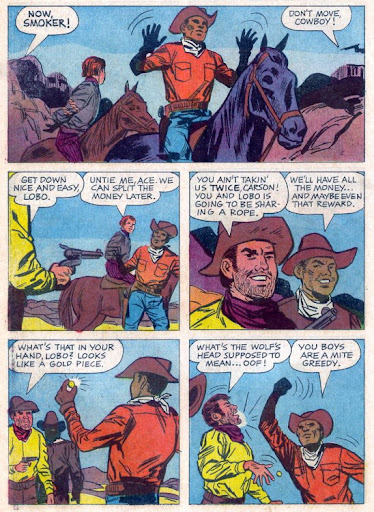
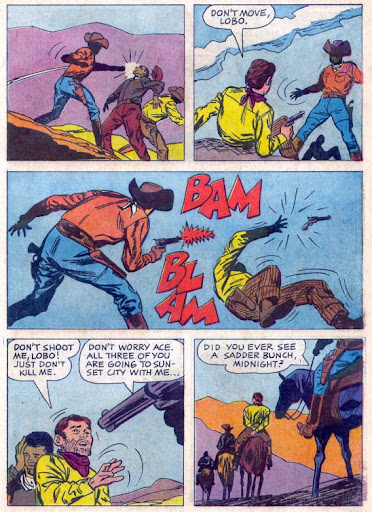
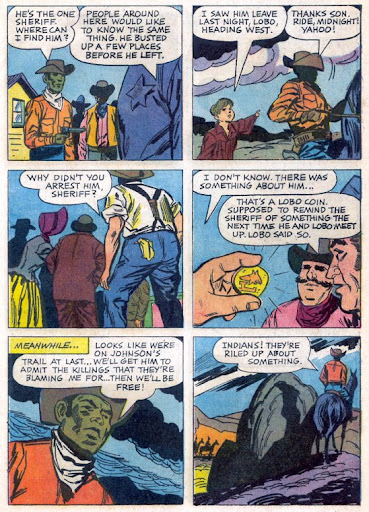
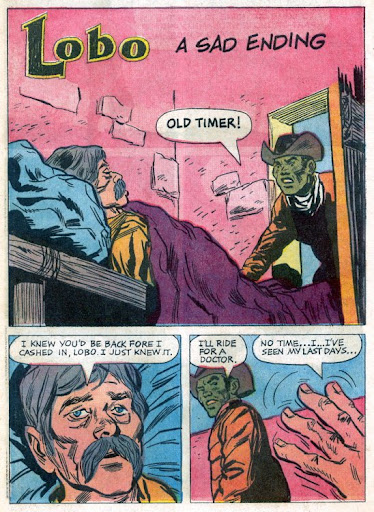
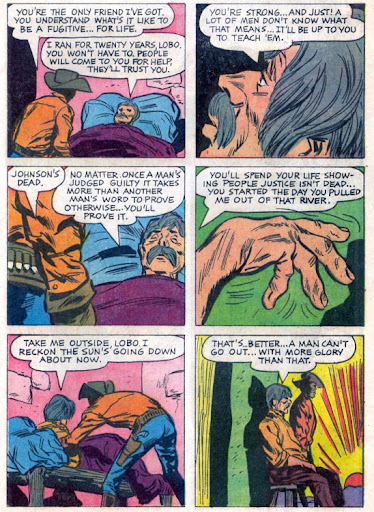
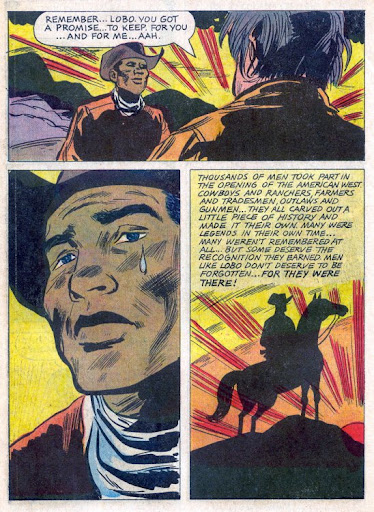
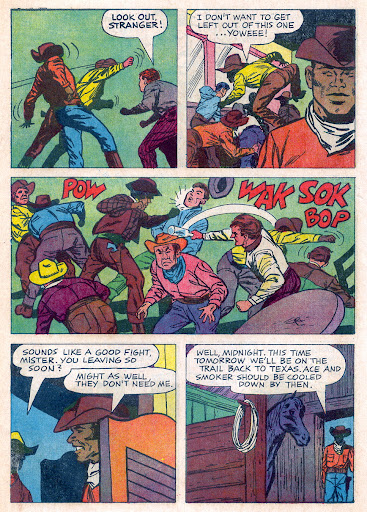
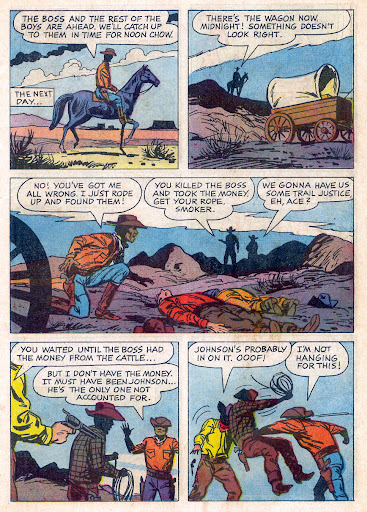
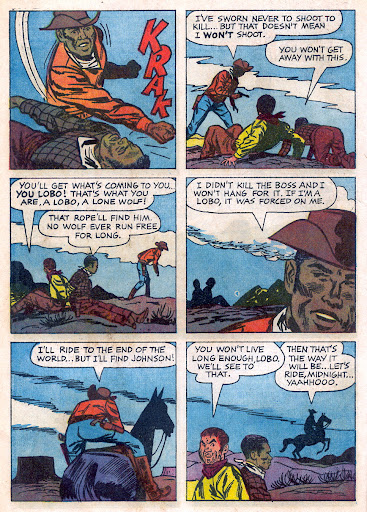
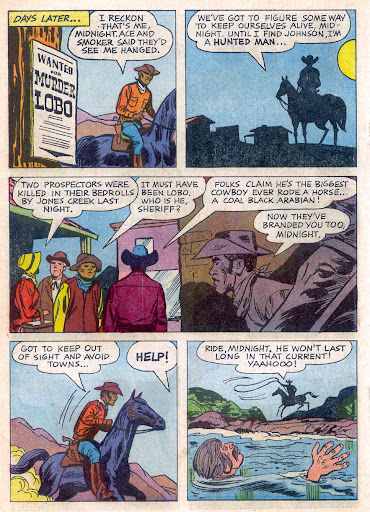
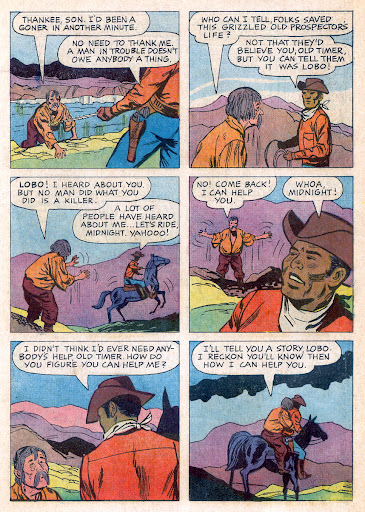
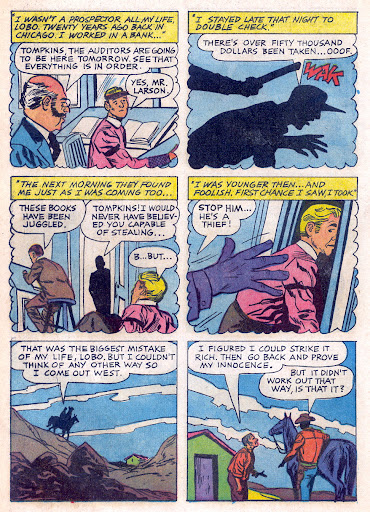
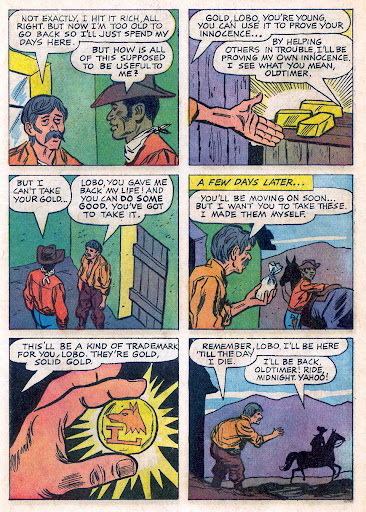
LOBO "Old 'Friend'" and "Sad Ending"

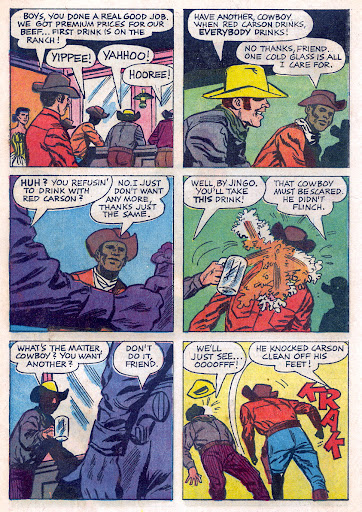
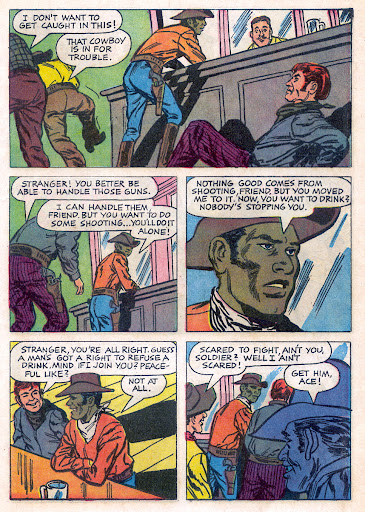
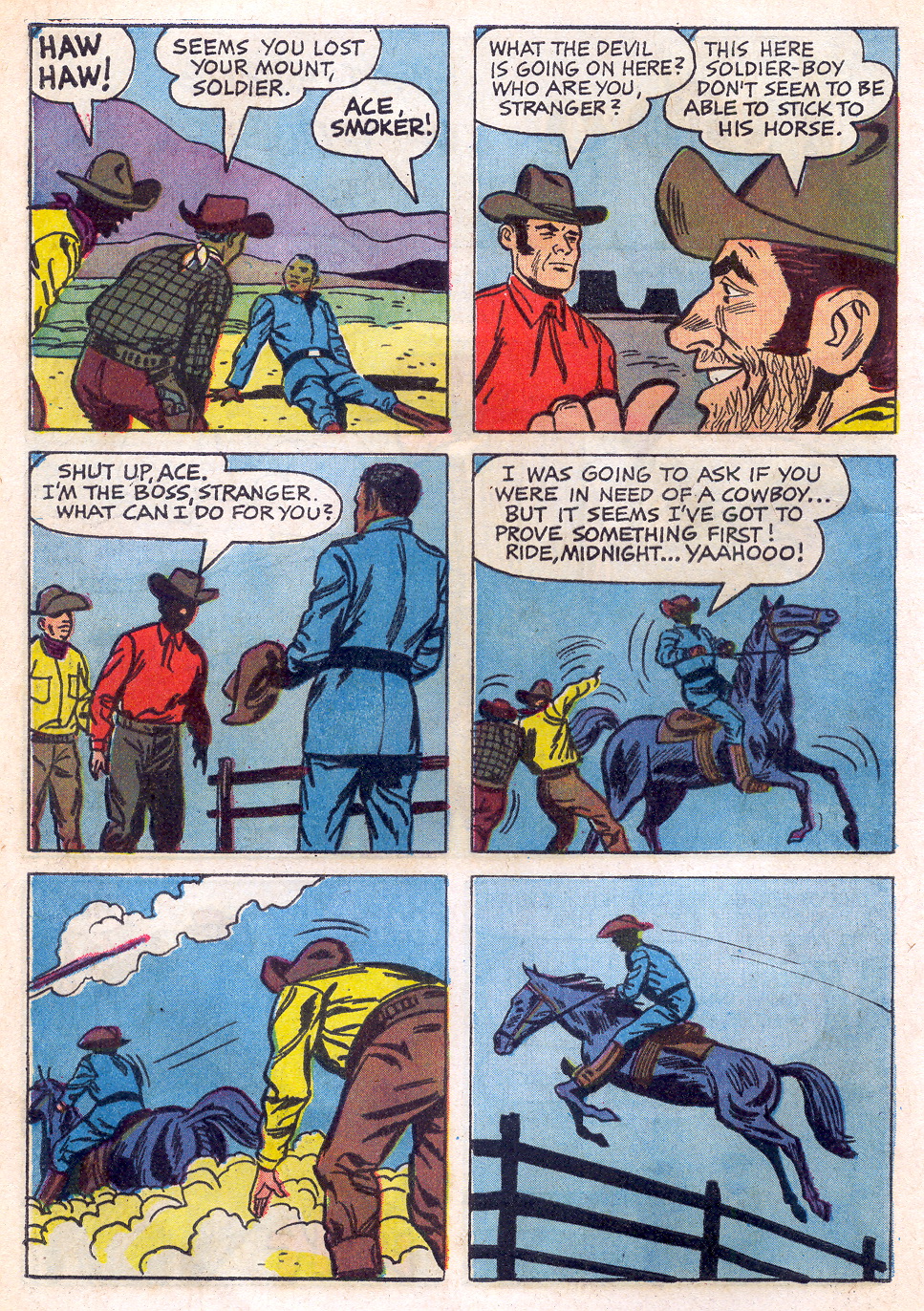
Landing a job as a "drover" with a cattle drive, an ex-Union soldier tries to be accepted as just another cowboy.
But a cruel Fate has other plans for him, as he is framed for murder.
Now known as "Lobo",  he seeks to clear his name...
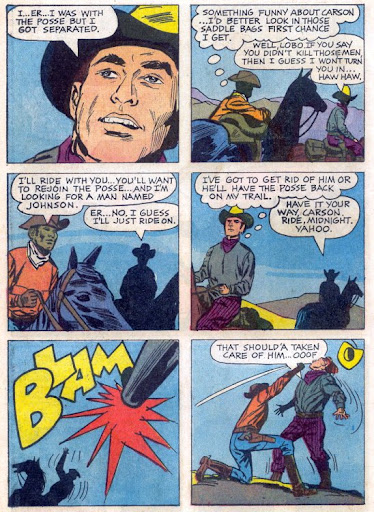
Thus ends the first chapter in The Saga of Lobo.
 Want to see the next (and final) issue?
Let us know!
BTW, the preceding tale  was written by Don "DJ" Arneson and illustrated by Tony Tallarico, two guys who were well ahead of their time!

Tuesday, February 21, 2012

LOBO "On the Trail" and "The Brand Sticks"

An anonymous ex-Union soldier wanders the Old West, seeking work.
Landing a job as a "drover" with a cattle drive, he tries to be accepted as just another cowboy.
But a cruel Fate has other plans for him...
Tomorrow: An Old "Friend" and A Sad Ending

Monday, February 20, 2012

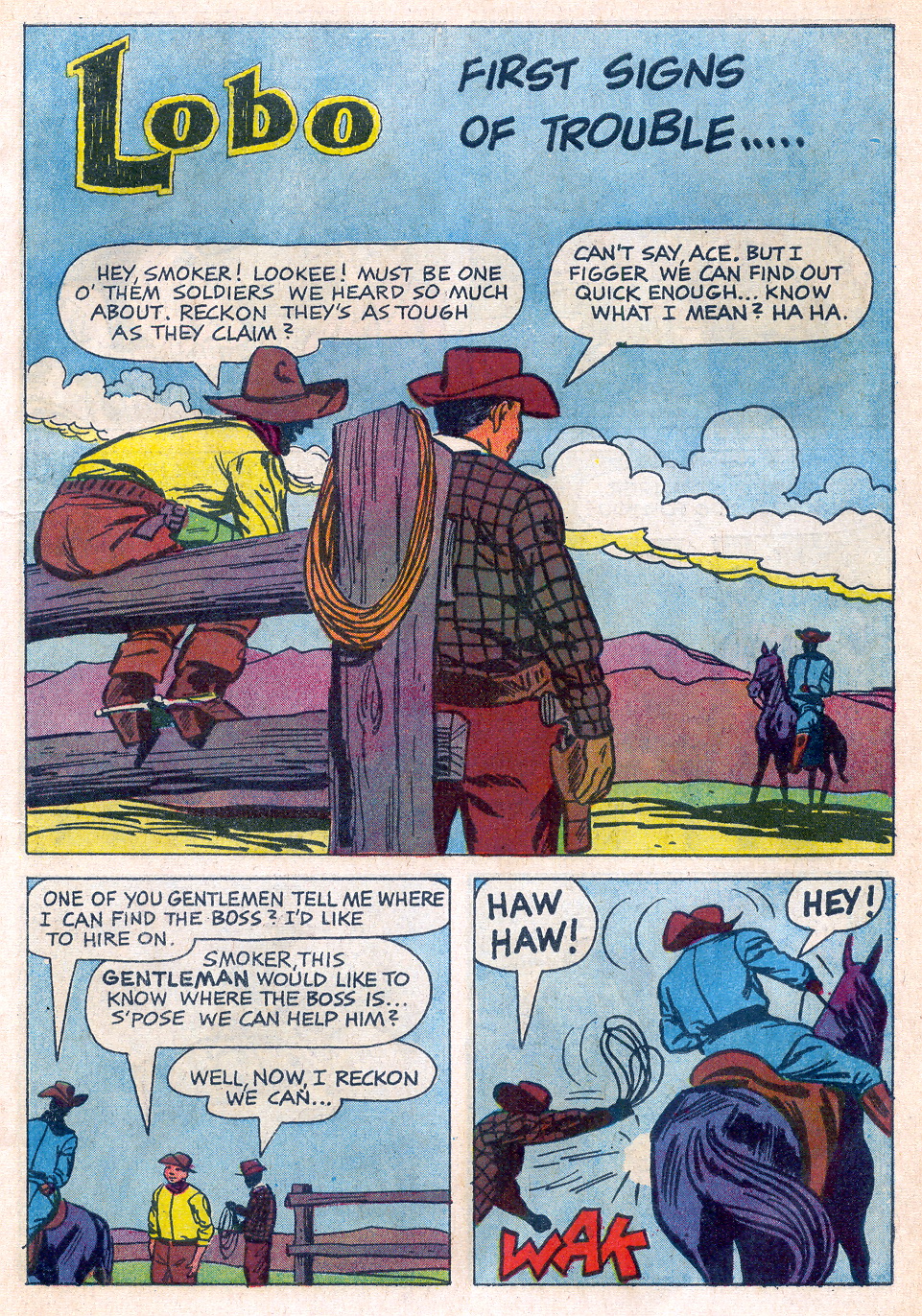
LOBO "The Saga Begins" and "First Signs of Trouble..."

Created the same year (1966) as Marvel's Black Panther (who guest-starred in Fantastic Four, Tales of Suspense, and The Avengers, but didn't get his own series until 1973, or his own comic until 1977), Lobo was the FIRST Black character with HIS OWN BOOK!
(Other Black characters had their own series in anthology books, but Lobo was the first to have his name AS the comic's title!)
Lobo combined a couple of popular concepts...
Man on the Run for a Crime He Did NOT Commit
Exemplified by then-hit tv series The Fugitive, Lobo was framed, but couldn't prove his innocence.
Lone Western Hero
A loner wandering the Old West, righting wrongs was an especially popular genre in tv Westerns.
Variations on the theme included gamblers (Maverick) and martial-arts experts (Kung Fu)
Note: the tv series Branded also combined both the Loner and Man Framed themes!
Prominent Black character
Black characters (except for sterotypes like Amos 'n Andy) were few and far between on tv until the mid-1960s, and even then only as supporting characters (usually servants).
1960s urban dramas like Naked City and East Side, West Side, which dealt with current social themes had Black guest stars including James Earl Jones and Diana Sands, but no Black regulars.
Star Trek (1966) had both a Black regular (Lt. Nyota Uhura) and Black actors in prominent roles as scientists and high-placed officers/officials (admirals, etc,).
But, at that point, there were no tv series with a Black lead or Black title character!
(Diahann Carroll's groundbreaking series Julia didn't debut until 1968!)
So, Lobo was, to say the least, a daring experiment, albeit one with as many popular themes as possible to maximize sales potential!
Unfortunately, it didn't work.
Lobo the comic only ran two issues.

Join us over the next few days as we relive The Saga of Lobo...

Monday, February 13, 2012

HEADLINE COMICS "Guns of Jesse James"

Sometimes, the most interesting Western comics tales aren't in Western comics...
...as this story from Headline Comics #27 (1947) by the legendary team of Simon & Kirby proves!
While not totally accurate in how Jesse died, the story does contain a number of true elements including his being shot from the rear by Bob Ford while hanging a picture.
(But he was shot in the head, not the heart, as shown in this tale!)

Be back next Monday, when We Return to Those Thrilling Days of Yesteryear (gee, that sounds familiar)...

Support Small Business!
Visit our  
online Jesse James store...

Monday, February 6, 2012

3-D: "Pony Express"

Get out the red/blue 3-D glasses (red on the left, blue on the right)...
...cause it's 3-D Week at all the RetroBlogs™!
This tale, written and illustrated by Howard Nostrand (doing a GREAT Jack Davis) for True 3-D #1 (1953), was especially-designed for use as a 3-D story (unlike some comic tales that were adapted from 2-D to 3-D during the 1950s 3-D craze.)
Support Small Business!
Related Posts Plugin for WordPress, Blogger...